Call now for your free phone consultation at 214-802-5516

WHY EXPERIENCE MATTERS IN FEDERAL CRIMINAL DEFENSE
EXPERIENCE IS MORE THAN THE NUMBER OF YEARS A LAWYER HAS PRACTICED
Experience in federal criminal defense is not measured simply by the number of years a lawyer has practiced law. What matters is what the lawyer has done during those years, the cases the lawyer has handled, the institutions the lawyer has worked within, and the perspectives the lawyer brings to the defense of a federal criminal case.
Attorney Vincent Wisely’s career has provided an unusually broad view of the criminal justice system. He has served as a Dallas police officer and narcotics officer, a felony prosecutor, legal counsel to a regional narcotics task force, an asset-forfeiture prosecutor, an attorney representing law-enforcement officers, a criminal defense lawyer in state and federal court, federal Criminal Justice Act counsel, appellate counsel before the United States Court of Appeals for the Fifth Circuit, and a university professor of criminology and criminal justice. His academic background includes both bachelor’s and master’s degrees in Criminology and Criminal Justice.
Each of those experiences provides a different perspective. Investigations look different from the street than they do from a police report. Evidence looks different to the prosecutor deciding whether a case can be proved than it does to the investigator who developed it. A federal prosecution looks different to defense counsel preparing for trial than it does years later when the record is examined for error on appeal.
No single background guarantees an outcome in a criminal case. But experience can affect the questions a lawyer knows to ask, the problems a lawyer recognizes, the evidence a lawyer scrutinizes, and the strategy a lawyer
develops.
In federal criminal defense—where investigations may involve multiple agencies, extensive discovery, complex sentencing rules, experienced prosecutors, and enormous consequences—those differences can matter.
DISCUSS YOUR FEDERAL CRIMINAL CASE WITH ATTORNEY VINCENT WISELY

DALLAS POLICE OFFICER
EXPERIENCE FROM THE INVESTIGATIVE SIDE OF A CRIMINAL CASE
Before becoming an attorney, Vincent E. Wisely served for more than seven years as a police officer with the Dallas Police Department, working in both patrol and narcotics assignments. That experience provided a firsthand understanding of criminal investigations long before he began examining them from the defense table.
Police reports and investigative files tell only part of the story. Having worked as a police officer provides a different perspective on how investigations actually develop in the field—how officers make observations and decisions, how information is communicated, how evidence is identified and collected, and how those events are later reduced to reports that may become evidence in a criminal prosecution.
His experience in narcotics enforcement is particularly relevant to a federal criminal practice in which drug investigations frequently involve surveillance, informants, controlled purchases, searches, seizures, cooperating witnesses, and law-enforcement interpretations of conduct and evidence.
A law-enforcement background does not determine whether an investigation was conducted properly or whether an officer’s account is accurate. It does, however, provide another perspective from which to examine the government’s evidence, test its assumptions, and ask questions that may matter to the defense.

FROM LAW ENFORCEMENT TO PROSECUTION
UNDERSTANDING HOW CRIMINAL CASES ARE EVALUATED, CHARGED, AND PROSECUTED
After leaving law enforcement and completing law school, Vincent Wisely served as an Assistant Criminal District Attorney in Johnson County, Texas. His responsibilities included felony case intake and review, preparing and presenting cases to the grand jury, assisting in jury trials, serving as legal counsel to a regional narcotics task force, and managing civil bond and asset-forfeiture litigation.
Prosecutorial experience provides a fundamentally different perspective on a criminal case. The prosecutor must evaluate an investigation after it reaches the courthouse: determine what the evidence actually proves, identify evidentiary problems, evaluate witnesses, make charging decisions, present allegations to a grand jury, and ultimately determine how a case should be prosecuted.
That perspective remains relevant on the defense side of a federal case. Effective defense counsel must do more than identify evidence favorable to the accused. Counsel must also understand how the government is likely to organize its evidence, which facts prosecutors may consider important, where weaknesses may exist, and how those considerations can affect charging decisions, negotiations, trial strategy, and sentencing.
Attorney Vincent Wisely’s path from police officer to prosecutor and ultimately to criminal defense counsel provided experience examining criminal cases from each of those positions—not merely studying how those institutions operate, but working within them.

NARCOTICS ENFORCEMENT FROM DIFFERENT SIDES
FROM NARCOTICS OFFICER TO TASK-FORCE COUNSEL TO FEDERAL DEFENSE
Drug prosecutions have been a recurring part of Vincent Wisely’s professional experience from different sides of the criminal justice system.
As a Dallas police officer, Vincent Wisely served in narcotics as well as patrol assignments. After becoming a prosecutor, he served as legal counsel to a regional narcotics task force while working as an Assistant Criminal District Attorney. Those positions provided firsthand exposure to narcotics enforcement both at the investigative level and from the legal and prosecutorial side of an investigation.
Today, that experience informs his representation of individuals charged in federal drug cases. Federal narcotics prosecutions can be built through surveillance, controlled purchases, cooperating witnesses, confidential sources, search warrants, electronic evidence, laboratory analysis, seizures of drugs and money, and statements attributed to defendants and alleged coconspirators. The government’s case may also extend far beyond the conduct charged in a particular count, especially when relevant conduct and drug quantity become issues at sentencing.
Experience on the enforcement side does not replace careful legal analysis of the government’s evidence. It provides another perspective from which to conduct that analysis. Understanding how narcotics investigations are developed can help defense counsel examine how an investigation began, how evidence was obtained, how investigators interpreted what they observed, and whether the conclusions ultimately presented by the government are
supported by the underlying evidence.
For Attorney Vincent Wisely, federal drug defense is therefore informed not only by years of defending criminal cases, but by earlier experience inside the institutions responsible for investigating and prosecuting narcotics offenses.

LITIGATING ALLEGATIONS OF POLICE MISCONDUCT
EXPERIENCE EXAMINING POLICE CONDUCT WHEN THE OFFICER’S ACTIONS WERE UNDER SCRUTINY
After leaving law enforcement and becoming an attorney, Vincent Wisely gained another perspective on police practices through years of litigation involving allegations of officer misconduct.
As legal counsel to police officers and law-enforcement associations throughout Texas, Wisely represented officers during administrative investigations involving alleged misconduct and litigated those matters before civil-service commissions, government tribunals, administrative bodies, and independent hearing examiners. He also responded as legal counsel to officer-involved shootings and custodial deaths, where the actions and decisions of law-enforcement officers could become the subject of immediate and intensive scrutiny.
That work required more than familiarity with police procedures. It required examining what an officer actually did, comparing reports and statements with the available evidence, evaluating policies and procedures, identifying inconsistencies, preparing witnesses, and litigating disputed allegations concerning law-enforcement conduct.
Those skills have direct application in criminal defense. Federal prosecutions often depend heavily upon what law-enforcement officers observed, did, documented, and later testified occurred. Challenging the government’s case may require counsel to look beyond the conclusions contained in an investigative report and examine the underlying conduct itself.
Attorney Vincent Wisely has spent different stages of his career viewing police conduct from very different positions: first as an officer, later as a lawyer litigating allegations concerning officer misconduct, and now as defense counsel responsible for scrutinizing government investigations on behalf of the accused.

DECADES AT THE DEFENSE TABLE
EXPERIENCE REPRESENTING THE ACCUSED IN STATE AND FEDERAL COURT
The value of Attorney Vincent Wisely’s earlier experience ultimately lies in how it is applied on behalf of the accused. Since entering private practice, Attorney Vincent Wisely has spent more than two decades representing individuals in criminal cases, with his practice increasingly focused on federal criminal defense.
Federal criminal litigation presents challenges that differ substantially from those encountered in many state prosecutions. Federal investigations may develop for months or years before charges are filed. Discovery can be extensive. Cases may involve multiple defendants, cooperating witnesses, electronic surveillance, financial records, forensic evidence, expert testimony, and investigative work performed by several federal, state, and local agencies.
The consequences can also be extraordinary. Decisions concerning pretrial detention, motions, plea negotiations, factual stipulations, relevant conduct, sentencing enhancements, criminal history, mandatory minimum sentences, and preservation of issues for appeal can materially affect a defendant’s future.
Experience in federal court develops differently from experience gained simply by practicing law for many years. It comes from repeatedly working through federal cases—from investigation and indictment through discovery, negotiations, hearings, trial preparation, sentencing, and appeal—and learning where decisions made at one stage
of the case can have consequences much later.
Attorney Vincent Wisely’s federal criminal practice is informed by the earlier stages of his career, but it is the years spent representing defendants that bring those perspectives together. The objective is straightforward: use every relevant part of that experience to examine the government’s case, protect the client’s rights, and pursue the strongest defense the facts and law permit.
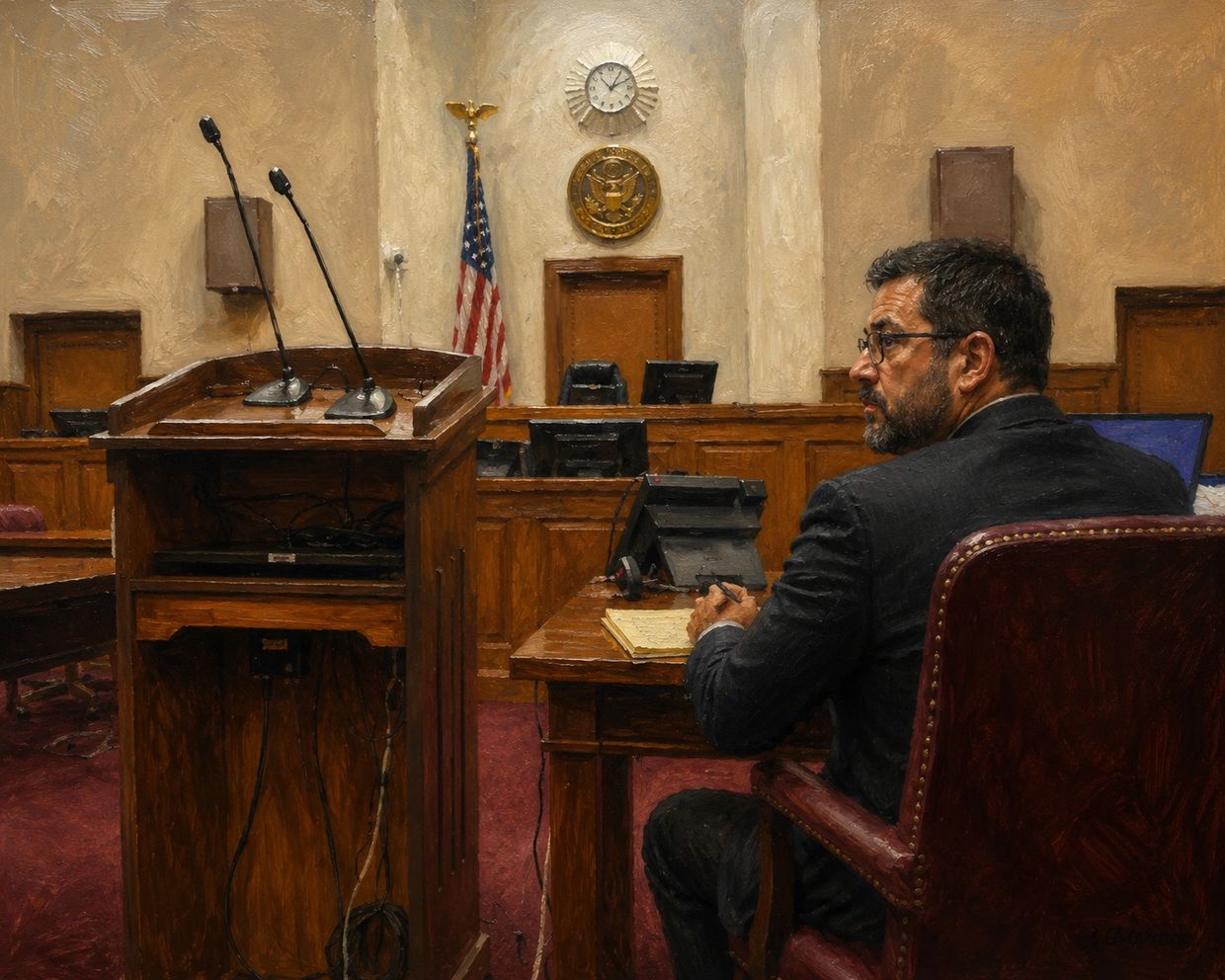
EXTENSIVE FEDERAL COURT EXPERIENCE
FEDERAL CRIMINAL DEFENSE IS NOT SIMPLY STATE-COURT PRACTICE IN A DIFFERENT COURTHOUSE
Federal criminal practice is its own system. Its procedures, investigative resources, sentencing structure, discovery practices, plea negotiations, and courtroom expectations can differ substantially from those encountered in state criminal court. Experience within that system matters.
Attorney Vincent Wisely has appeared as counsel in hundreds of federal cases in the Northern District of Texas alone. His federal criminal experience includes representation through pretrial proceedings, motion practice, plea negotiations, evidentiary hearings, trial preparation, jury trial, sentencing, and appeal.
That experience includes serving as lead defense counsel in federal criminal jury trials before United States District Judges in the Northern District of Texas. It also includes years of representing defendants through Criminal Justice Act appointments, where federal judges entrust private attorneys with the representation of individuals who cannot afford counsel.
Repeated experience in federal court develops practical judgment that cannot be obtained from statutes and rules alone. It teaches counsel how decisions made early in a prosecution can affect sentencing months later; when a factual stipulation may have consequences beyond the plea itself; how guideline issues can change the practical value of a plea agreement; which issues must be preserved; and when the defense should challenge the government rather than accept its characterization of the evidence.
Federal defendants face prosecutors and investigative agencies that handle federal cases every day. Their defense counsel should understand that environment as well.

FEDERAL TRIAL EXPERIENCE
WHEN THE GOVERNMENT MUST PROVE ITS CASE
Most federal criminal cases do not end in a jury trial. But the ability to prepare a case for trial—and to try it when necessary—remains an essential part of criminal defense.
Attorney Vincent Wisely has served as lead defense counsel in federal criminal jury trials before United States District Judges in the Northern District of Texas. His courtroom experience extends across a career that has included prosecution as well as criminal defense, providing firsthand experience presenting evidence, examining witnesses, addressing juries, and litigating contested criminal cases.
Trial experience affects more than what happens after a jury is selected. Every significant piece of evidence should be examined with an understanding of how the government could ultimately attempt to prove it in court. Witness credibility, admissibility, cross-examination, evidentiary weaknesses, investigative assumptions, and the government’s ability to connect individual pieces of evidence into a coherent case can all affect decisions made long before trial.
That perspective also matters during negotiations. A meaningful evaluation of a plea offer requires understanding not only the potential sentence, but the strength of the government’s evidence, the defenses available, the risks of trial, and the consequences of foregoing it.
Not every case should be tried. Not every case should be resolved by plea. The decision belongs to the client after informed consultation with counsel. Experience matters because the advice leading to that decision should be grounded in an understanding of both paths.

FEDERAL APPELLATE EXPERIENCE
SEEING A CRIMINAL CASE THROUGH THE EYES OF AN APPELLATE COURT
Federal criminal representation does not necessarily end when judgment is entered. Attorney Vincent Wisely has represented defendants in criminal appeals before the United States Court of Appeals for the Fifth Circuit, including briefing federal criminal appeals and presenting oral argument before the court.
Appellate practice requires a different way of examining a criminal case. The focus shifts from what might happen to what actually happened: the rulings the district court made, the objections counsel raised, the record that was created, the legal standards governing review, and whether an asserted error was properly preserved.
That experience can be valuable long before an appeal exists. Decisions made during investigation, plea negotiations, motion practice, trial, and sentencing can determine what issues remain available for appellate review. A potentially important issue may have little value on appeal if the necessary objection was never made or the record was never properly developed.
Appellate experience therefore adds another perspective to trial-level representation. It encourages counsel to think not only about the immediate decision before the court, but also about how that decision—and the record supporting it—may later be examined by a reviewing court.
Attorney Vincent Wisely’s experience representing defendants in both federal district court and the Fifth Circuit allows him to approach a federal criminal case with both perspectives in mind: litigating the case before the trial court while remaining attentive to the record that may ultimately follow the client on appeal.
FIFTH CIRCUIT ORAL ARGUMENT
Listen to Attorney Vincent Wisely present oral argument before the United States Court of Appeals for the Fifth Circuit in a federal criminal appeal.
FEDERAL SENTENCING EXPERIENCE
THE CONVICTION DOES NOT ALWAYS DETERMINE THE SENTENCE
In federal criminal practice, some of the most consequential advocacy occurs after guilt has been established. A conviction identifies the offense, but it does not necessarily answer the more difficult question of what sentence the defendant should receive.
Federal sentencing can require careful analysis of the Sentencing Guidelines, statutory penalties, relevant conduct, criminal history, offense characteristics, enhancements and reductions, disputed facts in the Presentence Investigation Report, and the sentencing factors Congress established in 18 U.S.C. § 3553(a).
Attorney Vincent Wisely has represented federal defendants through the sentencing process, including reviewing Presentence Investigation Reports, identifying and litigating guideline issues, preparing objections, developing mitigating evidence, drafting sentencing memoranda, and advocating for individualized sentences before United States District Judges.
Sentencing experience also affects decisions made much earlier in a case. Plea language, factual stipulations, admissions concerning relevant conduct, drug quantity, firearms, loss amounts, role in the offense, and other facts may have consequences that do not become fully apparent until the advisory guideline range is calculated. Effective representation therefore requires counsel to think about sentencing long before the sentencing hearing itself.
The Guidelines are only the beginning of that analysis. Federal sentencing ultimately requires an individualized determination that considers the defendant’s history and characteristics, the circumstances of the offense, the purposes of punishment, and whether the sentence imposed is sufficient without being greater than necessary.

CRIMINOLOGY, EDUCATION, AND THE LAW
EXPERIENCE INFORMED BY BOTH PRACTICE AND ACADEMIC STUDY
Attorney Vincent Wisely’s experience with the criminal justice system extends beyond law enforcement and the courtroom. He earned both a Bachelor of Arts and a Master of Arts in Criminology and Criminal Justice from the University of Texas at Arlington, completing his graduate degree with a 4.0 GPA.
Attorney Vincent Wisely later returned to the university as an Adjunct Professor in UTA’s Department of Criminology and Criminal Justice, where he taught The American Judicial System, a senior-level required course examining federal and state court structure, judicial decision-making, constitutional principles, and applied case analysis.
Academic study provides a perspective different from legal practice. Criminal defense requires understanding statutes, constitutional law, evidence, procedure, and sentencing rules. Criminology asks broader questions about criminal behavior, institutions, human development, deterrence, punishment, rehabilitation, and the operation of the justice system itself.
Teaching adds another dimension. Explaining the judicial system to university students requires stepping outside the immediate demands of an individual case and examining how courts, lawyers, law enforcement, and legal institutions function as a system.
For Attorney Vincent Wisely, those perspectives complement rather than replace courtroom experience. Federal criminal defense remains an intensely practical undertaking, but careful advocacy can benefit from understanding both the rules governing a case and the larger human and institutional forces operating within it.
EXPLORE SCIENCE & PUNISHMENT
Attorney Vincent Wisely explains how criminology, human development, the age-crime curve, life-course research, and desistance can provide important context for understanding criminal behavior and individualized federal sentencing.

DIFFERENT PERSPECTIVES. ONE PURPOSE.
PUTTING A CAREER OF EXPERIENCE TO WORK FOR THE DEFENSE
No single job, title, degree, or courtroom appearance defines meaningful experience. Its value comes from what a lawyer has learned along the way—and whether that knowledge can be applied when a client’s freedom and future are at stake.
Attorney Vincent Wisely has experienced the criminal justice system from perspectives that few lawyers share. He has investigated criminal activity as a police officer, worked narcotics enforcement, evaluated and prosecuted criminal cases, advised a narcotics task force, litigated allegations involving police misconduct, represented the accused in state and federal court, tried federal criminal cases, handled federal sentencing proceedings, represented defendants on appeal, studied criminology at the graduate level, and taught the judicial system at a major university.
Those experiences do not predetermine the answer in any case. They provide different ways of asking the questions that matter: How was the investigation conducted? What does the evidence actually prove? What assumptions has the government made? What facts can be challenged? What are the consequences of a plea? What happens at sentencing? What must be preserved for appeal? And, ultimately, what course best serves the client?
Today, all of those perspectives have one purpose: representing people accused of federal crimes.
DISCUSS YOUR FEDERAL CRIMINAL CASE WITH ATTORNEY VINCENT WISELY
Federal investigations and prosecutions can move quickly, and decisions made early can affect the course of the case. Contact Attorney Vincent Wisely to discuss your circumstances and the options available for your defense.